 EN
EN  Romana
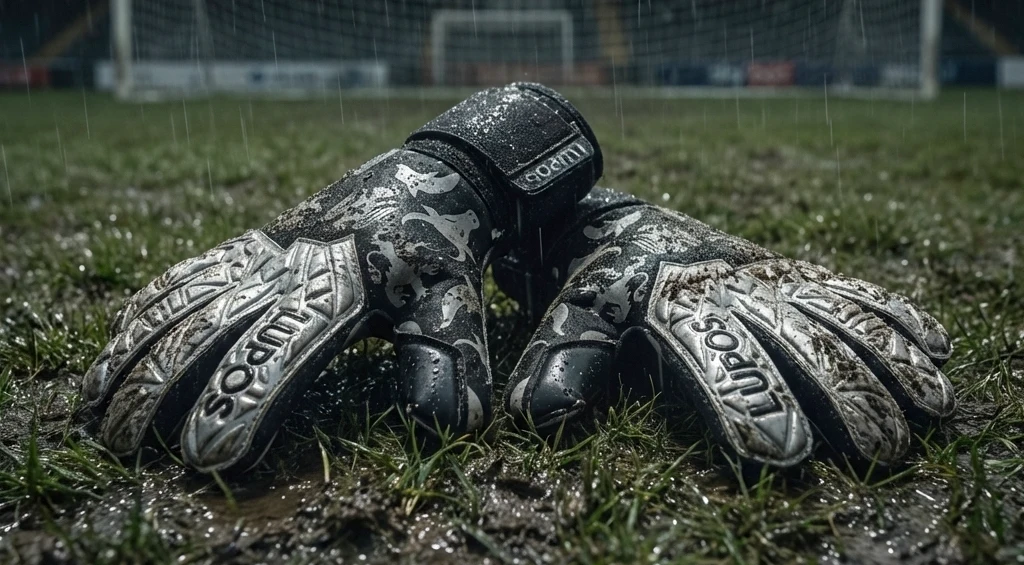
Have you ever felt a wet ball slip out of your palm just as you take the decisive shot? In the rain, every detail counts. The ball becomes heavier, slides faster, and the thin layer of water between your palm and the ball can reduce your control in a split second.
This is where latex comes in. The difference between soft and hard latex directly influences how goalkeeper gloves react in wet conditions. Whether you play in the juniors and want to impress in your next match, if you are a regular in the lower leagues or you are a regular defender at the amateur level, the right choice helps you to have more confidence in every intervention.
Let's clarify what each type of latex means and how to choose it according to your level and style of play.
What happens to latex in the rain
Natural latex is a porous material. It reacts to moisture and changes its level of grip depending on how much water it retains on the surface. The problem is not just the rain that falls, but the film of water that forms between your palm and the ball.
If the latex is too dry, the ball slips. If it is soaked, you lose control. For stable results, your palm should be slightly damp, not saturated.
Many goalkeepers intentionally wet their gloves before a match. They do this to activate the grip, that is, the ability of the latex to "grab" the ball. The type of latex determines how effectively this process works.
Soft latex: high adhesion, faster wear
Soft latex, also known as match latex, emphasizes grip. Its structure is finer and more "sticky", which allows it to create better contact with the surface of the ball, even in the rain.
Advantages
High grip in wet conditions, if you keep it slightly damp
Better control on powerful shots
Clearer ball feel in the palm
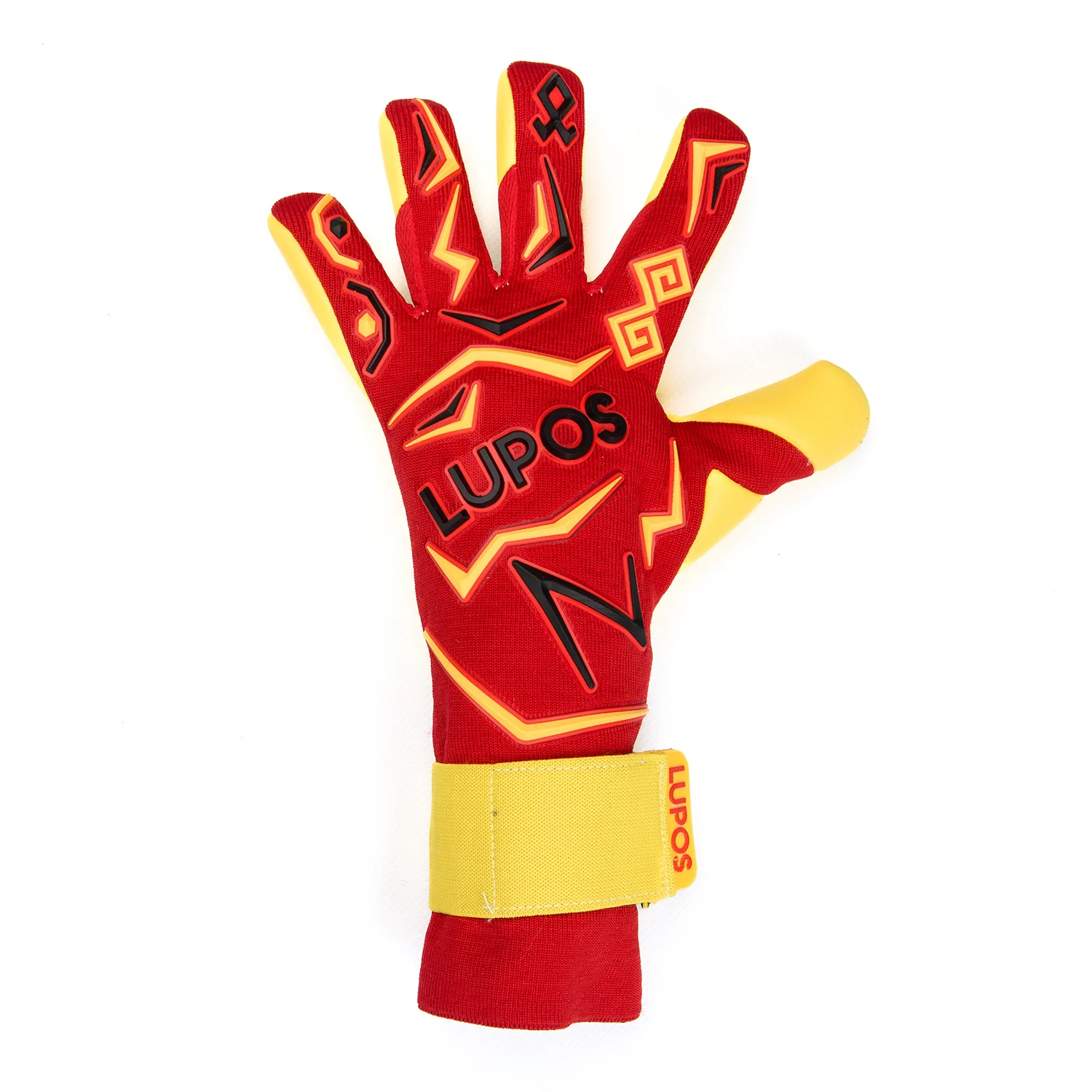
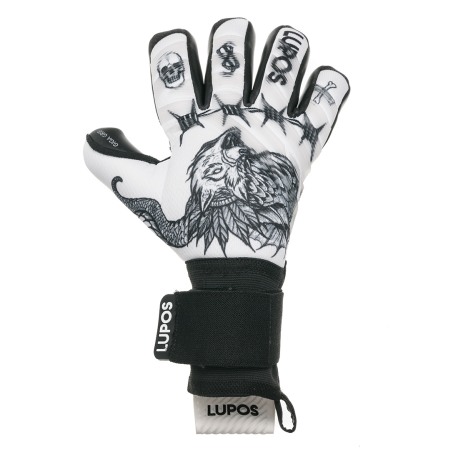
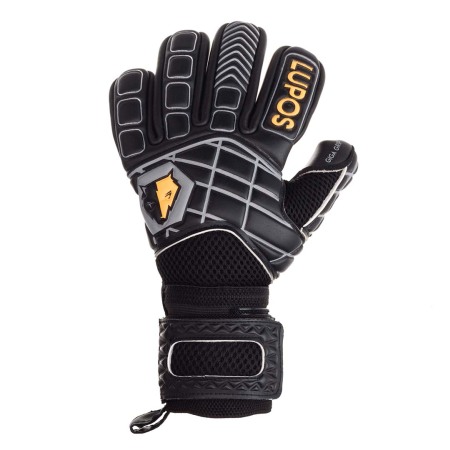
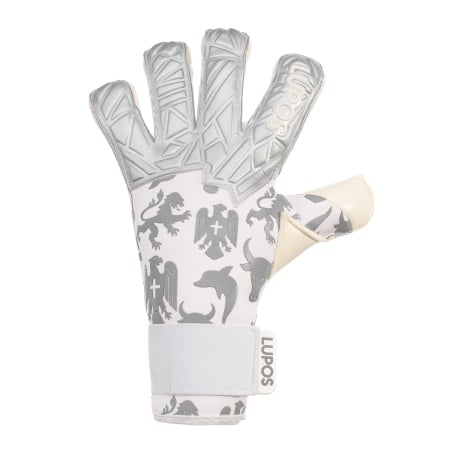
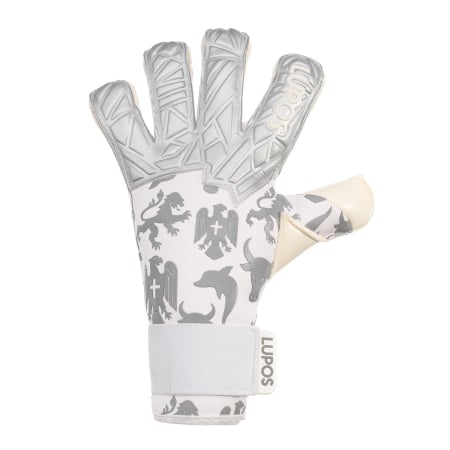
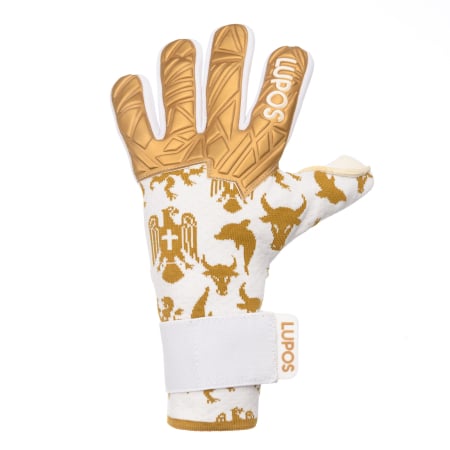
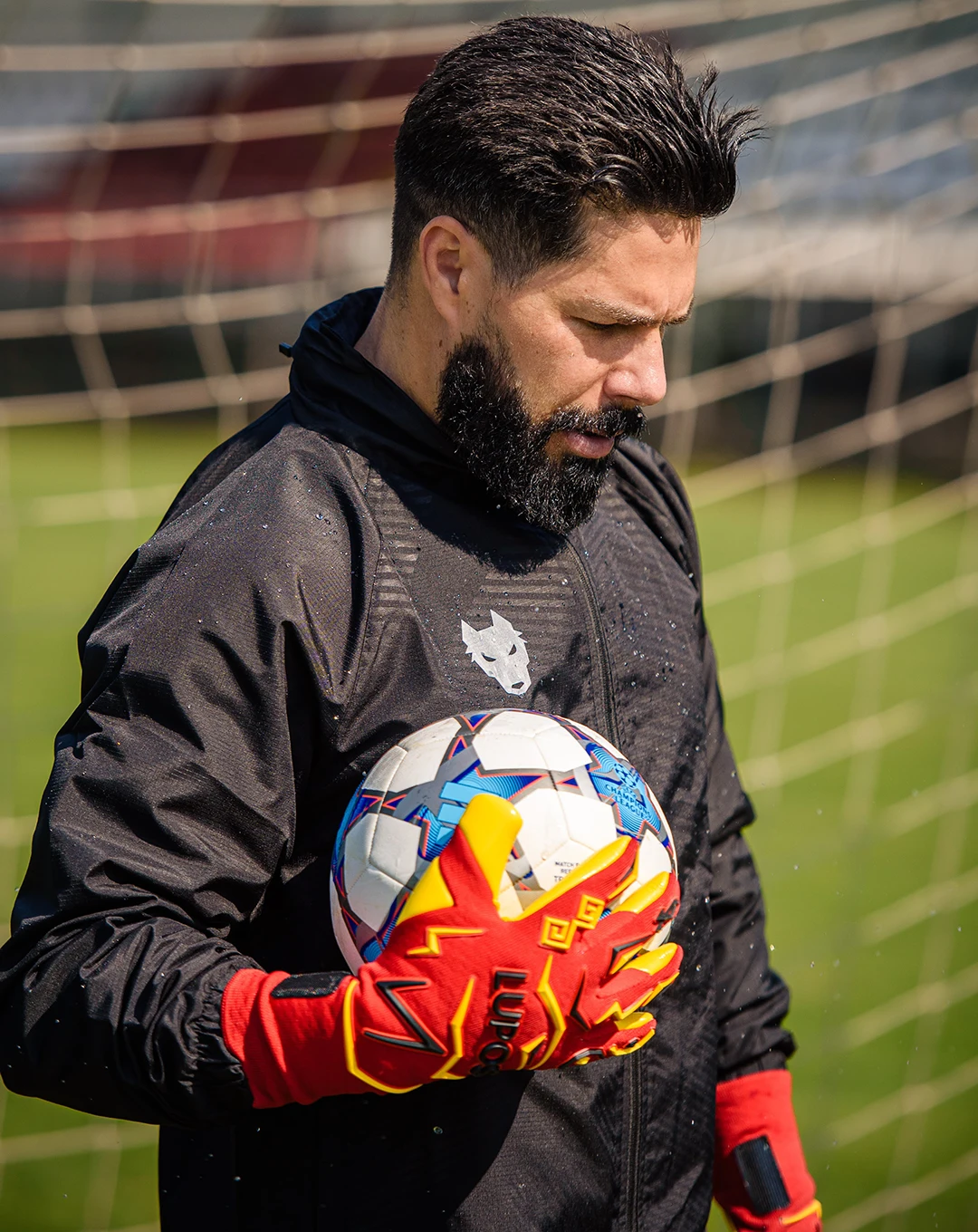
An example is the Lupos Tattoo model, equipped with German Giga Grip latex.
This type of palm offers a balance between grip and moderate wear resistance. For a 15–23 year old goalkeeper who plays official matches weekly, such a glove supports performance without completely sacrificing durability.
Disadvantages
It wears out faster, especially on wet synthetic pitches
Requires careful maintenance
Becomes slippery if you let it dry completely during the game
For juniors between 8 and 13 years old, soft latex is suitable for important matches, but not for daily training on synthetics. Wear occurs quickly, and the cost increases.
Hard latex: higher resistance, moderate grip
Hard latex has a denser structure. Manufacturers consider it for training and frequent use. It is more resistant to abrasion and constant friction with synthetic turf.
Advantages
Increased durability
Stable behavior on wet synthetic fields
More cost-effective for regular training
For regular use, especially when training 3–4 times a week, hard latex protects your investment. If you are 23–40 years old and play regularly at the amateur level, you probably want goalkeeper gloves that last for several months without completely losing control.
Disadvantages
Less grip compared to soft latex
Less precise control on hard-hit balls
Does not react as well to controlled humidity
In the rain, hard latex offers predictable behavior, but does not give you the same confidence in difficult saves.
The choice is not black or white. If you play constantly, the ideal would be to have two pairs: one for the match, one for training.
How to maximize performance in the rain
Regardless of the type of latex, the way you use your gloves influences the result.
Wet your palm with clean water before playing.
Do not soak the latex.
Keep a towel next to the goal and wipe off excess water.
Avoid rubbing your palm on the turf.
Do not dry your gloves on a radiator or in direct sunlight. Latex hardens and cracks. Let them dry naturally, at room temperature.
Size matters just as much. A glove that’s too loose reduces control in the rain, and one that’s too tight limits mobility. Check out our goalie glove sizing guide.
Choose a fit that allows you to feel the ball without any unnecessary gaps in your palm.
If you’re just starting out and still weighing your options, learn how to choose your goalie gloves.
It helps you match your skill level to your palm type, fit, and budget.
What to choose based on your skill level
8–14 years (developing juniors) Use hard latex for training and keep soft latex for matches. Learn the technique without wearing out your premium palm quickly.
15–23 years (semi-pros and pros) Rotate at least two pairs. Soft latex for competition, durable latex for intense sessions. If you play in the rain frequently, try out options specifically designed for wet conditions.
23–40 years old (regular amateurs) Analyze how often you play on synthetic. If you have only one match per week, soft latex can be a good option. If you train often, invest in a durable pair for regular use.
LuposGK develops goalkeeper gloves and other goalkeeper equipment adapted to the real needs of Romania. The brand is appreciated for its current design, dynamism and competitive price-quality ratio compared to established brands. The models adapt quickly to trends and field requirements, without unrealistic promises.
If you want to optimize your performance in the rain, analyze the type of latex, the surface you play on and the frequency of use. Choose wisely, test and adjust.
Discover the full range of LuposGK goalkeeper gloves!
Explore the new models, check the technical details and choose the equipment that suits your style. Stay connected to upcoming releases and follow updates on goalkeeper collections.