 EN
EN  Romana
You buy a new pair of goalkeeper gloves and wonder how long they will last? After two months, they already look worn out? Or, on the contrary, you have a pair that still holds up well after a whole season? The difference is not about luck. It depends on your choices, the pitch, how often you train and how you take care of them.
In most cases, a pair can last between 4 weeks and 4–5 months. The range is wide because each goalkeeper has a different rhythm. A 10-year-old who trains twice a week does not consume as much latex as a 19-year-old goalkeeper from League 3 who plays on synthetics every day.
Let's see specifically what influences the lifespan of your gloves and what you can do for stable results.
1. Type of latex: maximum grip or greater resistance?
The latex in the palm decides how well you grip the ball and how quickly your gloves wear out. The rule is simple: softer latex means stronger grip, but faster wear.
Premium latex models, often used in official matches, offer excellent grip. The ball “sticks” better to the palm, and control of powerful shots increases. If you play 3–4 training sessions per week plus a match, such latex can last 4–8 weeks, especially on synthetic pitches.
Harder latex, commonly found in training gloves, withstands friction with the ground better. The grip is slightly reduced, but for daily exercises it works very well. Many goalkeepers choose a combination: premium latex for matches and durable latex for training. This way you protect your investment and maintain performance where it counts.
2. Playing surface: natural grass vs. synthetic
The pitch changes everything. Natural grass is gentler on latex. On the other hand, 3G or 4G synthetic pitches are abrasive. Rubber granules and sand get into the palm and grind the top layer.
If you play constantly on synthetics, don't be surprised if the latex starts to wear out after a few weeks. For regular use on such pitches, choose goalkeeper gloves with more resistant latex and save the match pair for natural grass. You can find suitable options in the dedicated range on https://luposgk.eu/manusi-portar, where models are designed for different levels of play and surfaces.
3. Training frequency and pair rotation
Do you train once a week or do you go out on the pitch every day? This is where the major difference comes in. The more often you expose the latex to friction and impact, the shorter its lifespan.
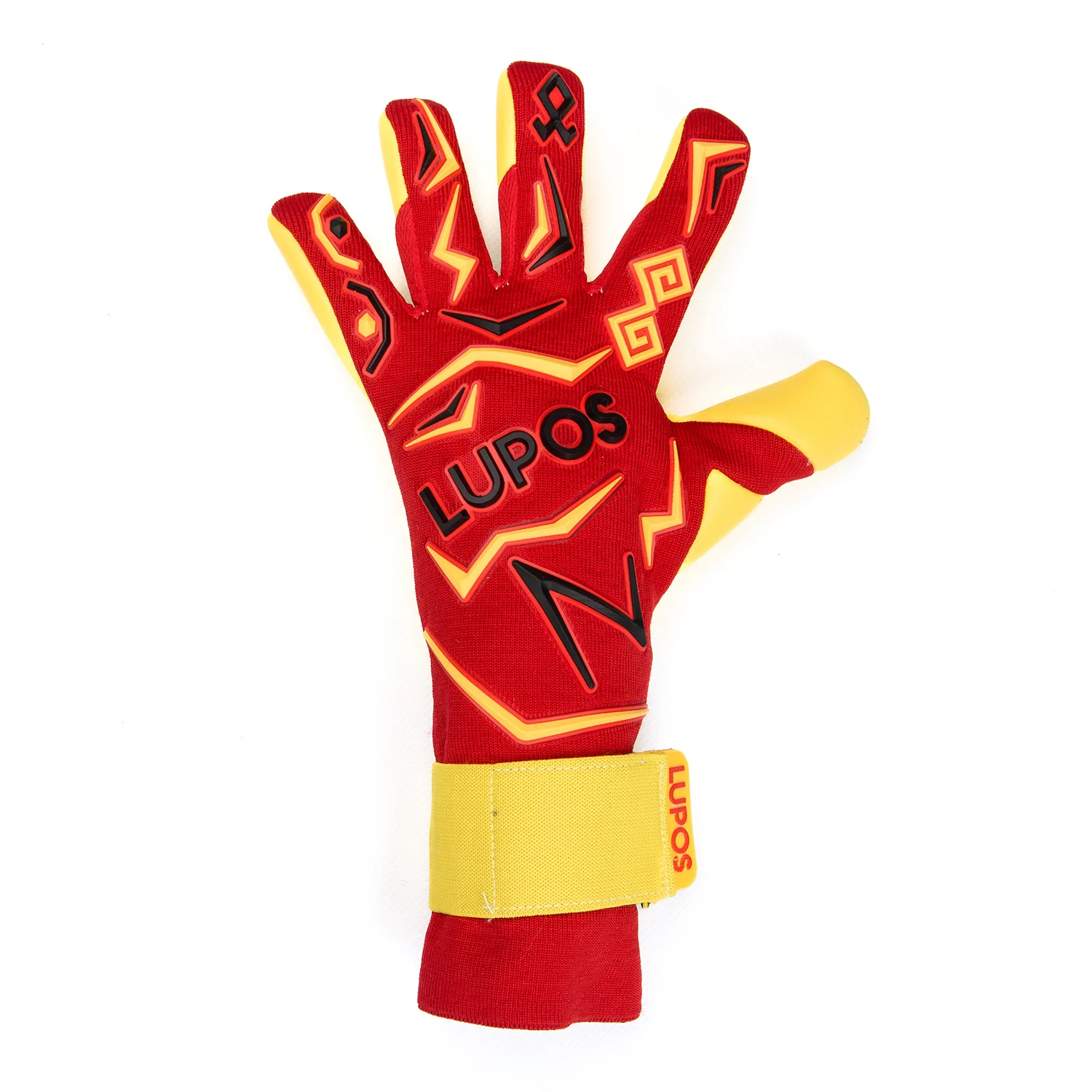
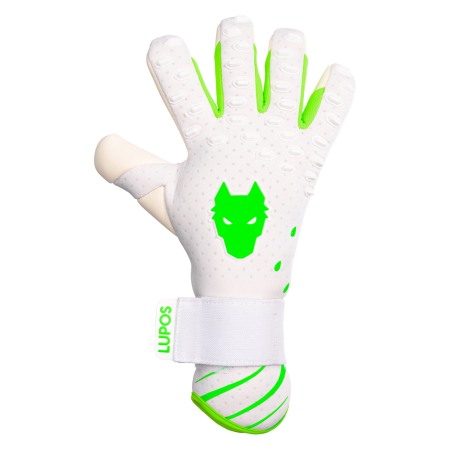
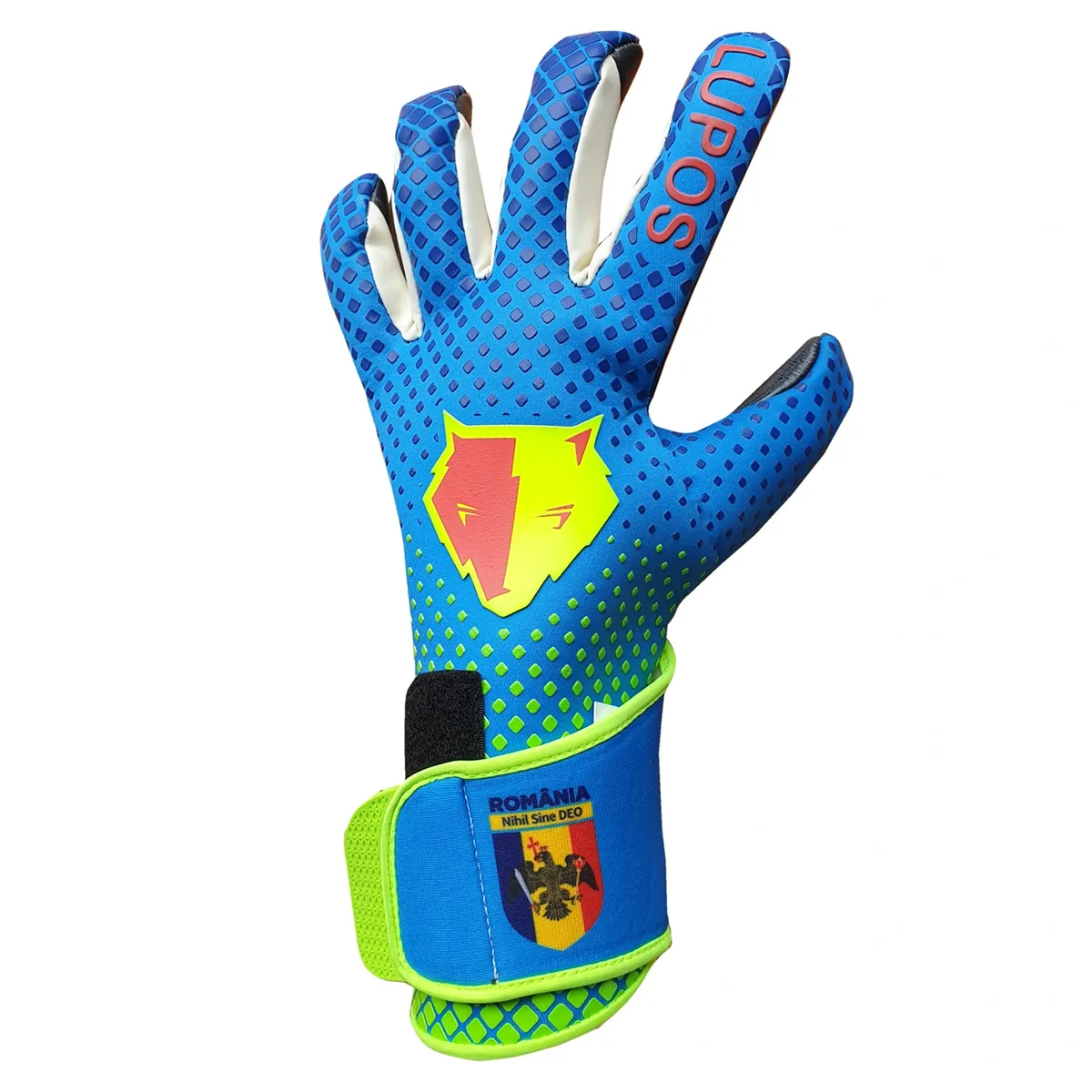
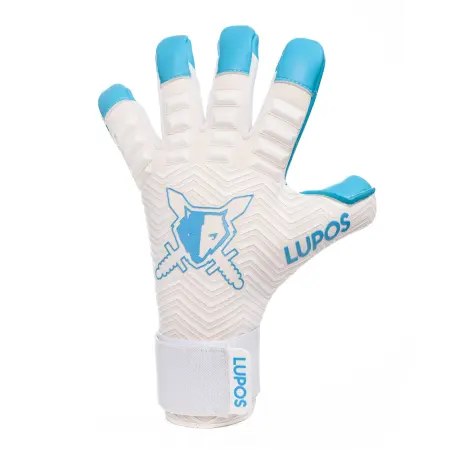
If you want to extend the life of your gloves, apply the rotation rule. Use one pair for training and another for matches. For example, a model like https://luposgk.eu/manusi-portar/m%C4%83nu%C8%99i-portar-lupos-nx-pro.html can be reserved for competitions, where you need high-level grip, while a more durable pair can withstand daily training.
At the end of the season, you will notice that both pairs look better than if you used one for everything. For juniors who want to impress and semi-professional goalkeepers who pay for their own equipment, this strategy really makes a difference to the budget.
4. Proper care after each use
Many goalkeepers lose months of their gloves' life by throwing them in their bag after training and forgetting them there until the next session.
Wash your gloves after each use in lukewarm water, without aggressive detergent. Rinse gently and press them in a towel. Do not wring them. Do not put them on the radiator. Excessive heat hardens the latex and cracks appear.
Let them dry naturally, in a well-ventilated area. Do not stick your palms together while they are wet. For a detailed guide, find out how to maintain your goalkeeper gloves. If you follow the basic steps, the difference will be visible after a few months.
5. Your playing technique and on-field habits
This is where many juniors lose points. After a save, do you stand up directly on your palms? Each such movement dulls the latex. Over time, smooth areas appear, without grip.
Practice getting up using your forearms or one leg. It seems like a small detail, but with 4 training sessions a week, hundreds of repetitions add up.
Also, avoid the habit of rubbing your palms on your pants to clean off dirt. If you need better grip during the match, lightly moisten the latex or use a dedicated spray. Applied correctly, it helps maintain grip without damaging the material.
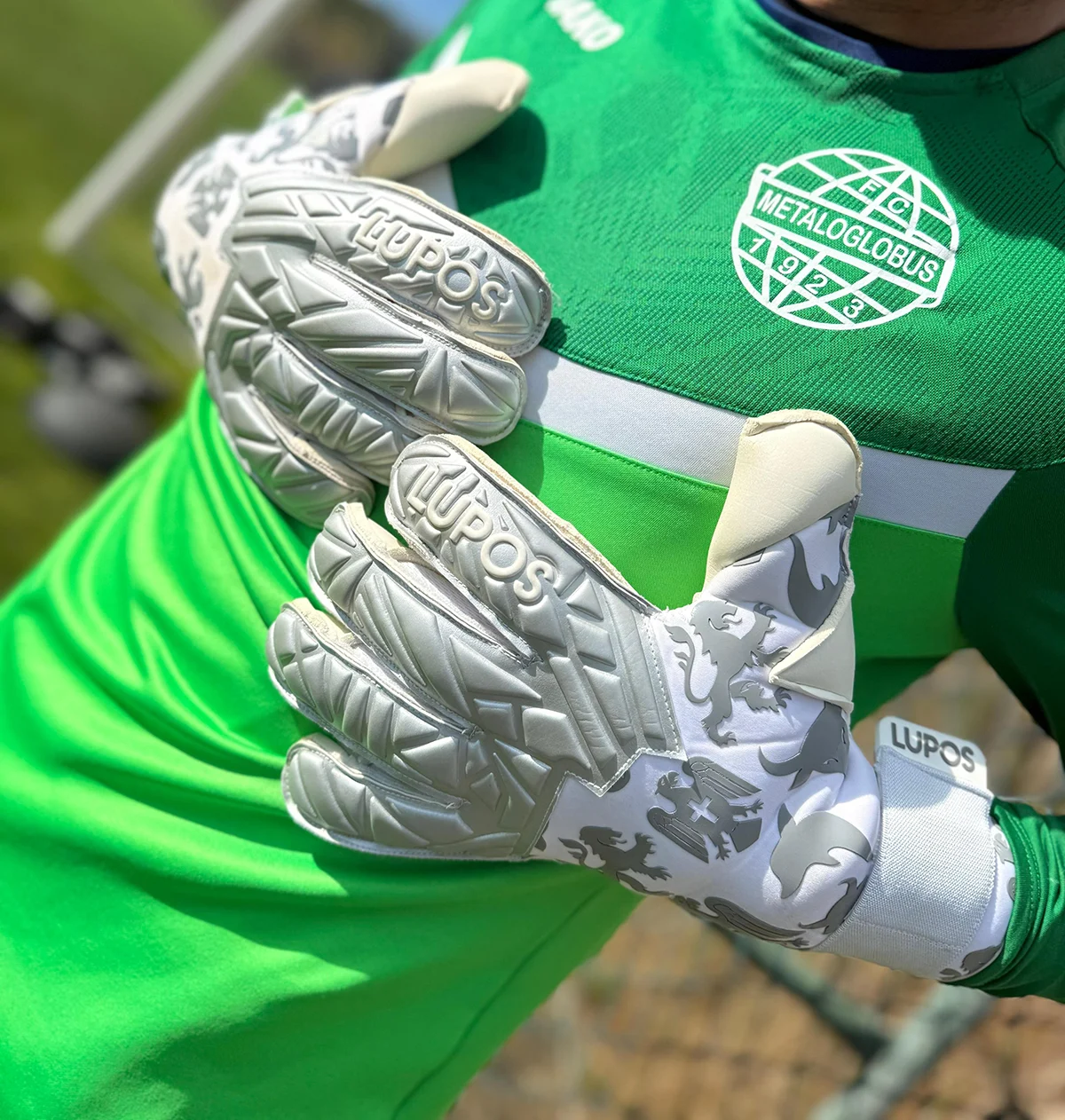
6. Glove cut and latex pressure
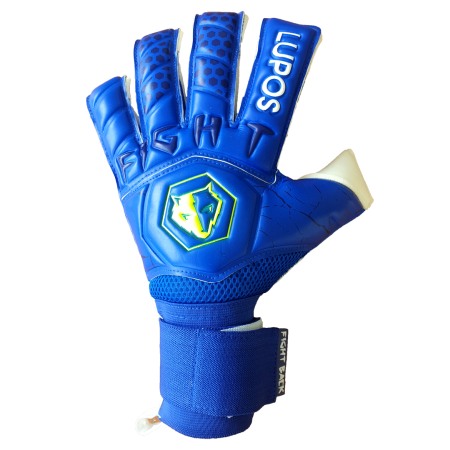
The cut influences how the latex stretches on the fingers. Negative cut offers a tight fit, much appreciated by young goalkeepers who want direct contact with the ball. The tension on the material is greater, and the areas between the fingers can wear out faster.
Roll Finger wraps the latex around the fingers and distributes the pressure differently. Sometimes it withstands repeated impacts better. Flat Cut leaves more space and can be more tolerant for long training sessions.
The cut alone does not decide how long the gloves last, but it influences how they wear out. Choose the model that suits your style and the level at which you play.
7. The right size
Gloves that are too small force the seams and constantly stretch the latex. Microcracks appear, then tears. Gloves that are too large create friction inside and you lose stability when gripping.
Measure your palm and check the size guide before ordering. For children between 8 and 14 years old, hands grow quickly, but don't buy two sizes bigger "to make them last longer". Performance decreases, and wear can occur in unexpected areas.
8. Weather conditions and humidity
Latex reacts differently to temperature. In very hot and dry weather, it becomes stiffer. In rain or high humidity, it remains more elastic, but can slip more on hard surfaces.
For stable results, lightly moisten your palms before playing, especially in the heat. If you often play in the rain, choose models adapted to these conditions. And if you notice premature wear, also consult the guide on preventing wear of goalkeeper gloves.
The lifespan of a pair of goalkeeper gloves has no universal answer. It matters how you play, where you play and how you care for them. If you apply rotation, choose the right latex and clean them correctly, you will see the difference.
If you want to choose your next pair, discover the full range of LuposGK goalkeeper gloves and other goalkeeper equipment. Romanian, dynamic brand, with current design and excellent quality-price ratio compared to established brands. Explore new models, check the size guide and follow future releases to stay connected to everything new for goalkeepers.