 EN
EN  Romana
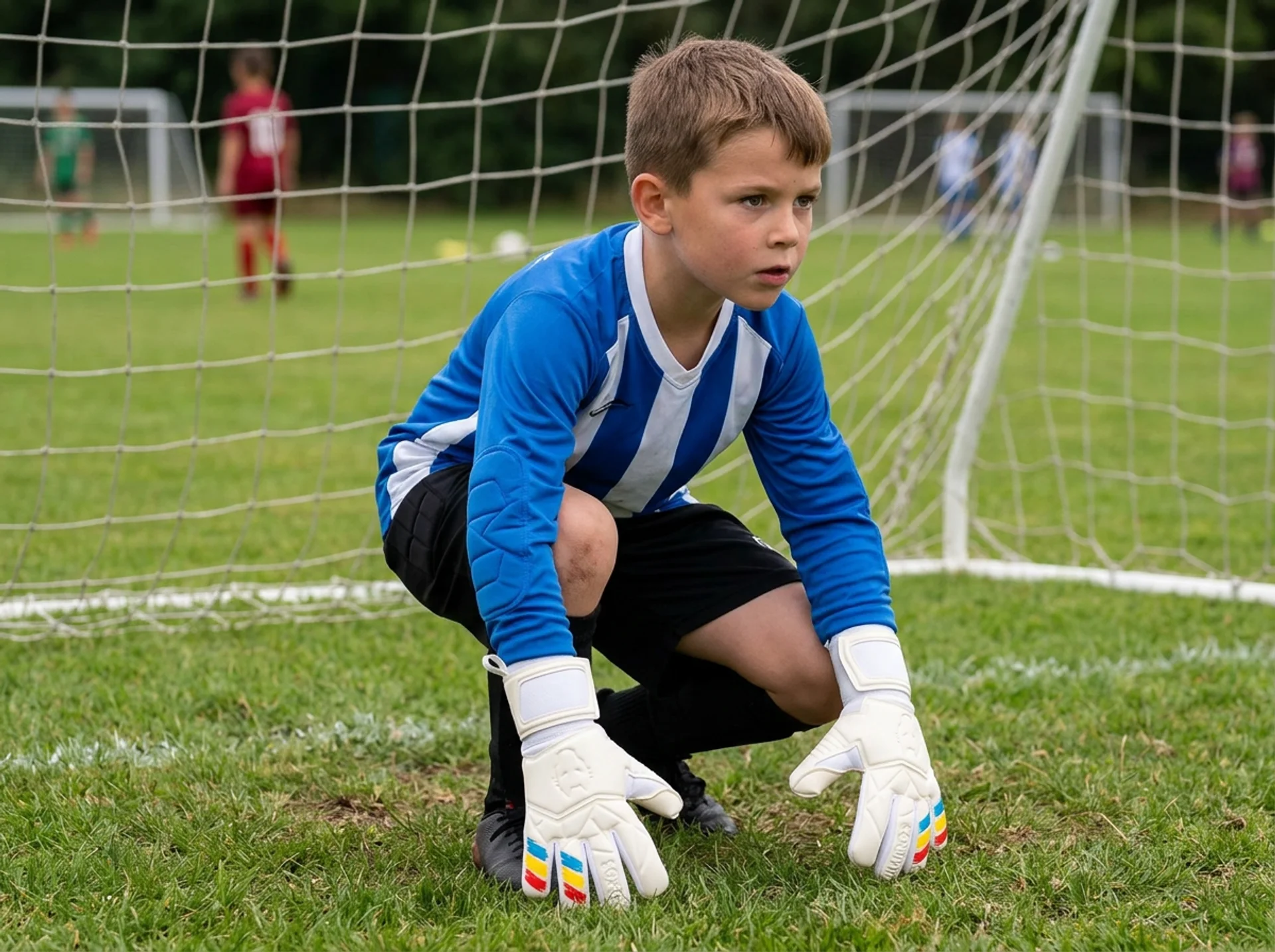
"Dad, I want to play in goal."
If you've heard that from your child, you've probably run through a few stages fairly quickly: joy (they're doing sport!), confusion (what gear do they need?), and mild panic (how much does all of this cost?).
The good news: it isn't complicated. The even better news: you don't need to spend a fortune to get your child the right equipment. But there are a few things worth knowing so you don't buy too little, too much, or the wrong size.
This guide to junior goalkeeper equipment is written for parents, not coaches. No excessive technical jargon, no endless product lists — just what you need to know, in the order you need to know it: from what age a child can play in goal, how to choose kids' goalkeeper gloves that actually fit, and which protective gear is worth the investment.
From what age can a child play in goal?
There's no fixed rule, but most football academies introduce the goalkeeper position around the ages of 8-10. Before that, children usually rotate positions — which is ideal, because it builds complete playing skills.
A few practical markers:
6-8 years — the child can start going in goal at training, but without specialising. At this age, what matters is catching the ball, having fun, and getting over any fear of it. Gloves are optional, but they do help with confidence.
8-10 years — goalkeeper-specific training begins: positioning, placement, distribution. This is where gloves become necessary, especially on artificial pitches, which burn the skin on any slide.
10-12 years — if your child has settled on the position, investing in protective gear becomes important. Shots get harder, dives get more frequent, pitches get less forgiving.
12+ years — a full kids' goalkeeper kit: quality gloves, body protection, and separate equipment for matches versus training.
How to choose kids' goalkeeper gloves — getting the size right
This is the mistake most parents make: buying gloves that are too big, on the logic that "they'll grow into them." An oversized glove shifts on the hand, the child loses control of the ball and — worse — loses confidence.
The basic rule
A goalkeeper glove should be 1 cm longer than the child's longest finger. Not 2-3 cm. Not "with a bit of room to spare." One centimetre — that's it.
How to measure correctly
- Place your child's hand flat on a sheet of paper, fingers together
- Measure from the base of the palm (where the wrist bends) to the tip of the middle finger
- Add 1 cm to that measurement
- Compare against the size chart
Rough guide by age
| Child's age | Approximate size | Hand length (cm) |
|---|---|---|
| 6-8 years | 4-5 | 14-16 |
| 8-10 years | 5-6 | 16-17 |
| 10-12 years | 6-7 | 17-18.5 |
| 12-14 years | 7-8 | 18.5-20 |
These are indicative — every child is different. Always measure. The most commonly requested sizes, size 5 and size 6 goalkeeper gloves, typically correspond to the 8-12 age group. And if your child falls between two sizes, go with the smaller one.
Which kids' goalkeeper gloves to choose, by level and surface
Not all gloves are the same, and not all of them suit a junior goalkeeper. Here's what actually matters:
For training on artificial turf (the most common conditions in Romania)
Artificial turf is the harshest surface for goalkeeper gloves. The abrasive surface wears latex down fast and burns unprotected skin on every slide. For frequent training on artificial pitches, you need gloves with durable latex — not the soft competition latex that gets destroyed in two or three sessions.
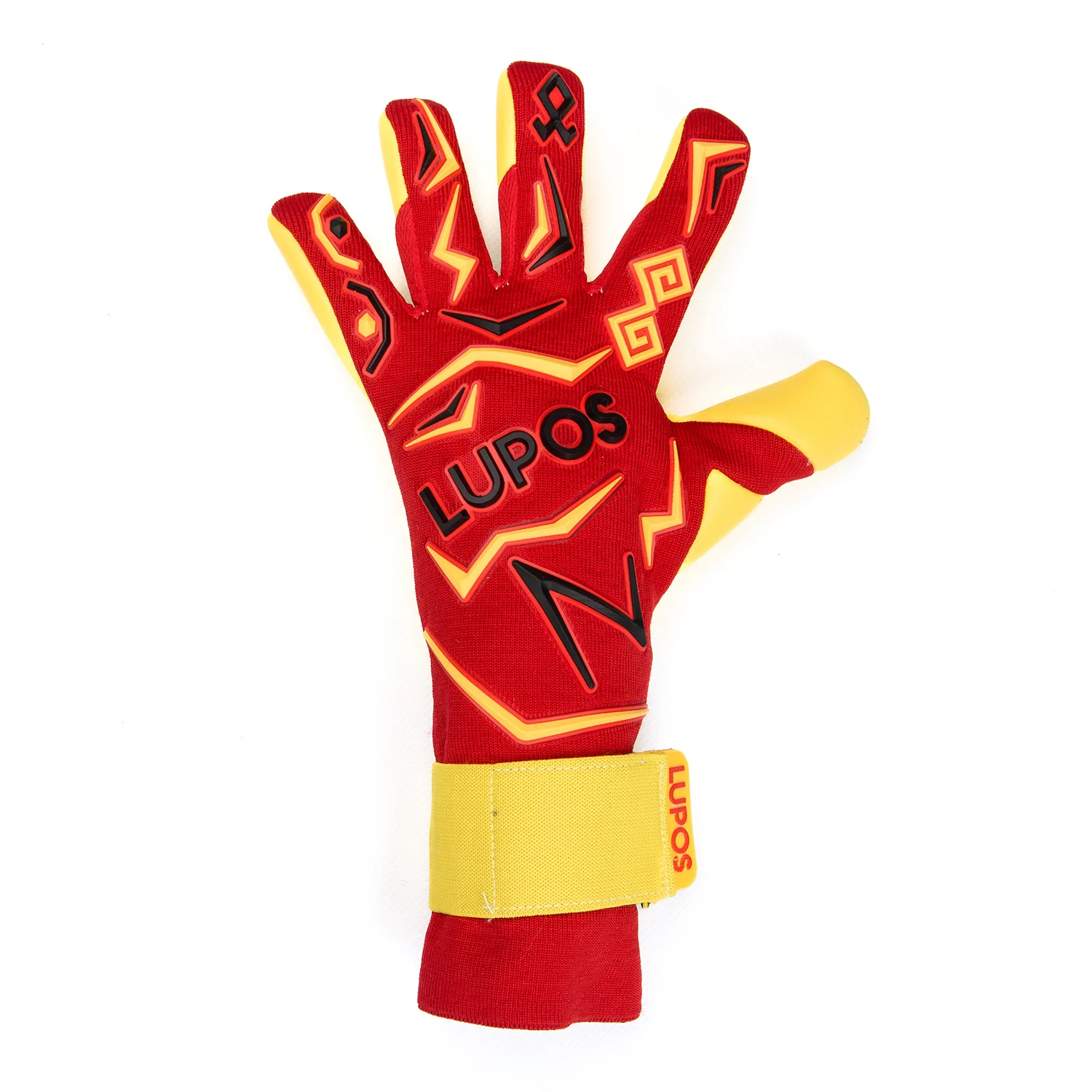
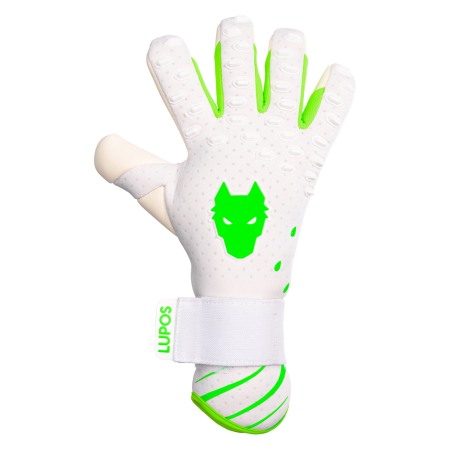
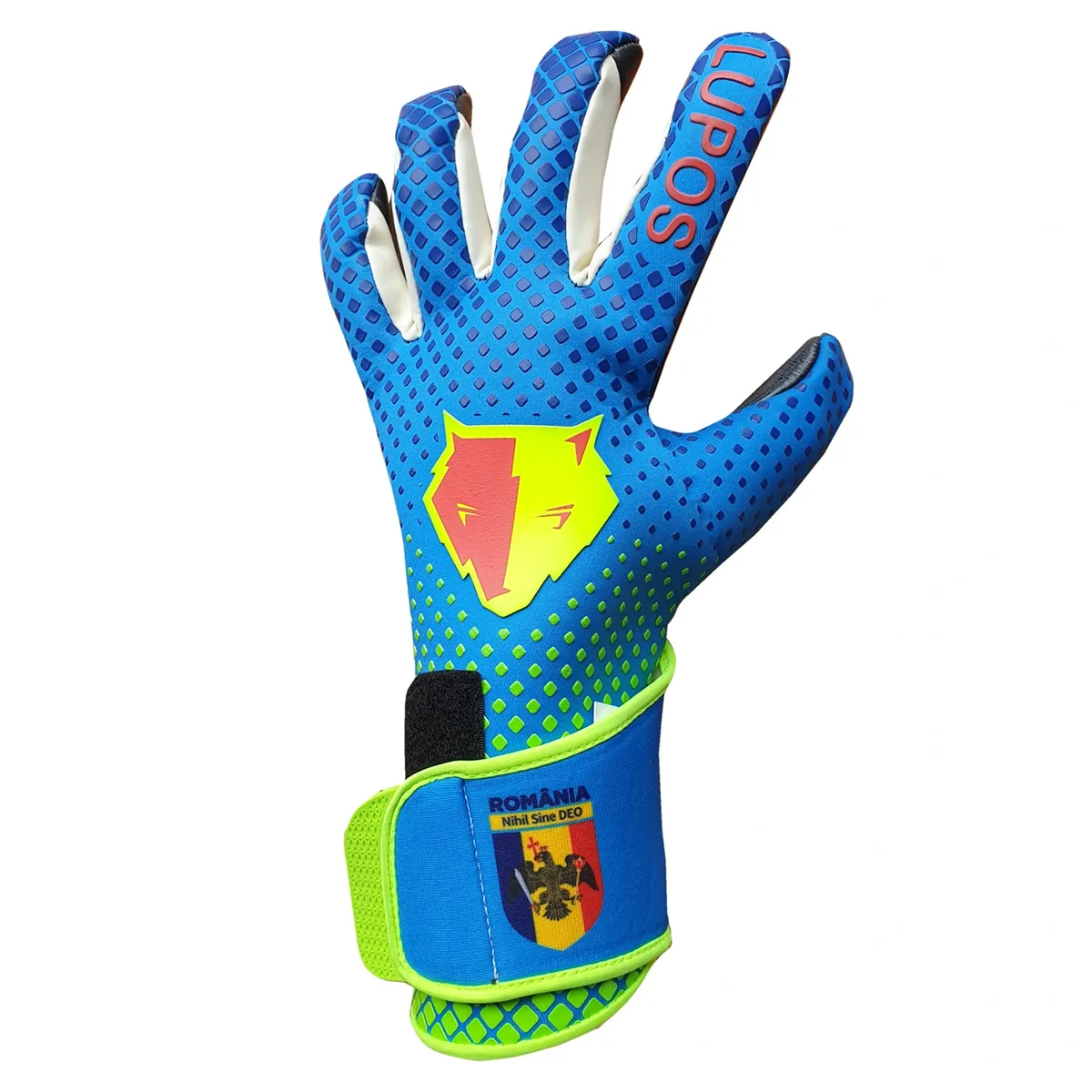
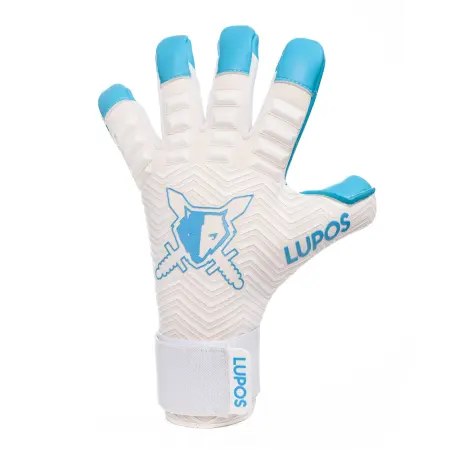
LUPOS Tricolor White (149 RON, sizes 5-11) — negative cut with Basic JSY latex, designed specifically for hard surfaces. No fingersave, simple and durable construction. Ideal as a first pair of "real" gloves for a junior training 2-3 times a week on artificial turf.
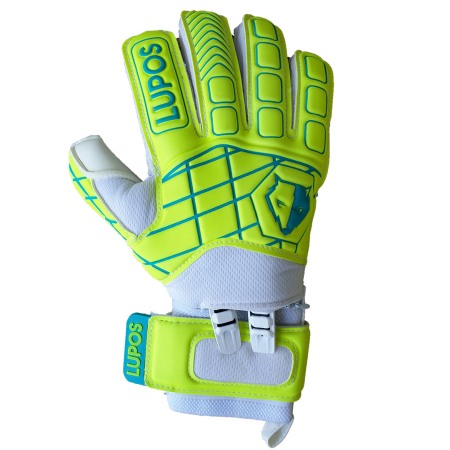
LUPOS Tricolor Navy (159 RON, sizes 5-11) — the same construction as the Tricolor White, but with removable fingersave protection. The spines can be taken out when your child doesn't want them and put back in for hard pitches or when they want the extra security. Effectively two gloves in one.
For matches and competitions (natural grass or quality artificial turf)
Once your child is playing official matches, grip becomes the priority. German natural latex offers superior tack, but it wears out faster — which is why it isn't recommended for daily training.
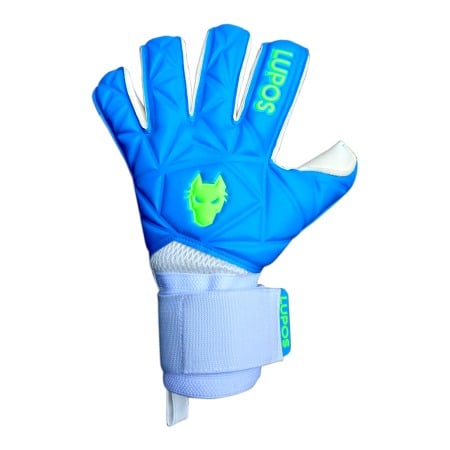
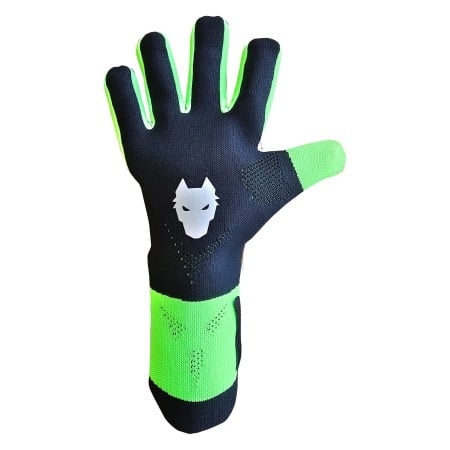
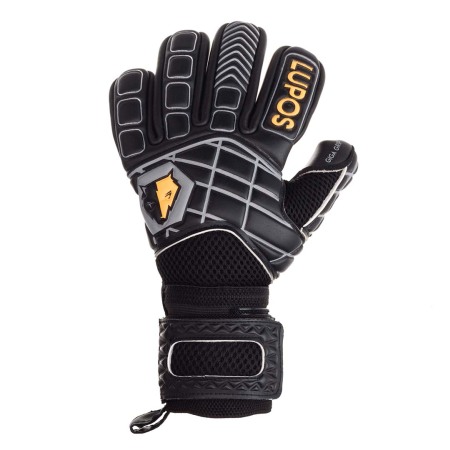
LUPOS Patriot (from 140 RON, sizes 6-11) — negative cut, pre-curved, with Ultimate Contact latex in the Super Premium category. The pre-curved fingers give a natural grip on the ball, and the perforated Airprene neoprene backhand provides good ventilation. A solid step up from training gloves to match gloves.
LUPOS Helix One (264 RON, sizes 6-11) — Bio Hybrid cut (roll finger with mesh inserts), 4mm German Contact latex, Super Premium. Professional-level grip, with anti-slip technology on the inner palm. For juniors already playing competitively who need maximum match performance.
How many pairs does a junior need?
Ideally two: one for training (durable latex, accessible price) and one for matches (premium latex, maximum grip). Training gloves wear out in 15-30 sessions on artificial turf; match gloves, kept strictly for games, can last a full season.
If the budget only allows one pair, go with the LUPOS Tricolor Navy — the durable construction survives training, and the removable fingersave adds versatility.
Goalkeeper protection for kids: what they need now, and what can wait
Goalkeepers fall. A lot. On pitches that are rarely natural grass. And children, flexible as they are compared to adults, still feel the impact — especially on artificial turf or hard-packed ground. Kids' goalkeeper equipment doesn't stop at gloves: body protection is the difference between a junior who dives without hesitation and one who shies away from the ball.
What we recommend from the start
LUPOS compression goalkeeper leggings (183 RON, sizes from 2XS) — 10mm EVA padding at the hips, knees and thighs, exactly the areas that take the contact on dives and slides. The compression supports the muscles and aids recovery. Worn under shorts, with perforated polyester panels on the back of the thighs for ventilation.
LUPOS base layer with EVA padding — short sleeve (205 RON, sizes from 2XS) — 17mm EVA padding at the shoulders, chest, ribs and lower back. Worn under the goalkeeper jersey like a second skin. The anatomical cut and stretch fabric (85% polyester, 15% elastane) don't restrict movement.
Both products are available from size 2XS and are recommended from age 6 upwards.
When protection becomes necessary
Training on artificial turf — padded leggings become essential from the first real dives. Knees and hips take the worst of it.
Matches and competitions — the base layer protects against ball impact (at U14+ level, shots already carry real power) and against contact with opponents.
Winter on hard ground — both the leggings and the base layer add a thermal layer on top of the protection.
5 common parent mistakes
1. "Get bigger gloves, they'll grow into them." Already covered. Oversized gloves = poor grip = a frustrated child. Buy the right size, and when they're outgrown, buy the next size. A training pair lasts 2-4 months with an active junior — it isn't a lifetime investment.
2. "Expensive gloves from day one." An 8-year-old training 2-3 times a week on artificial turf will destroy any premium glove within weeks. Start with durable training gloves (Tricolor White/Navy, 149-159 RON), not with Super Premium latex at 250+ RON.
3. "They don't need protection, they're a child." The opposite is true: it's precisely because they're a child that they need it. Not because the shots are powerful, but because fear of falling is the single biggest obstacle in a young goalkeeper's development. A child who knows a dive won't hurt will dive. One who's already had turf burn without protection will hesitate every single time.
4. "All goalkeeper gloves are the same." They aren't. Gloves for artificial turf and gloves for natural grass use different latex, different cuts, different durability. A soft-latex competition glove on artificial turf is finished in two or three training sessions.
5. "If they're not a professional, good equipment isn't worth it." Good equipment isn't only for professionals — it's for anyone who wants to develop. Good glove grip, proper padding in the leggings — these don't automatically make a better goalkeeper, but they let a child practise without fear and focus on technique rather than pain.
How to care for the equipment so it lasts
Goalkeeper gloves have a limited lifespan, but you can extend it significantly with a few simple rules:
- Wet the palms before every use — damp latex grips better and wears more evenly
- Rinse after every use with cold water, no harsh detergents
- Never dry them in direct sun or on a radiator — the latex stiffens and cracks
- Store them somewhere cool, not in the kit bag for days on end
For protective gear (leggings, base layer): wash at a maximum of 30°C on a delicate cycle, no fabric softener, air dry. Don't iron over the EVA padding.
A complete guide to glove care is available in our article: How to wash and care for goalkeeper gloves.
Conclusion
Your child doesn't need the full kit on day one. They need a pair of gloves that fit and the courage to throw themselves after the ball. The rest comes gradually, as they grow, train, and confirm that the goal is where they want to be.
But when you do invest in equipment — invest correctly. A glove that fits beats an expensive glove. Padding at the knee removes the fear of diving. And a child who isn't afraid to fall is a child who will improve.
Recommended LUPOS products for juniors
| Product | Sizes | Price | Best for |
|---|---|---|---|
| LUPOS Tricolor White | 5-11 | 149 RON | Artificial turf training, first pair |
| LUPOS Tricolor Navy | 5-11 | 159 RON | Training + removable fingersave |
| LUPOS Patriot | 6-11 | from 140 RON | First step towards match gloves |
| LUPOS Helix One | 6-11 | 264 RON | Matches and competition, advanced level |
| Compression goalkeeper leggings | 2XS-XL | 183 RON | Hip, knee and thigh protection |
| Short-sleeve base layer | 2XS-XL | 205 RON | Shoulder, chest, rib and back protection |
Explore the full junior goalkeeper range at luposgk.eu — kids' goalkeeper gloves from size 5, junior goalkeeper leggings from size 2XS, a Romanian brand you can trust.