 EN
EN  Romana
Here's the translation:
If you've landed on this page, one of the following has probably happened: your child jammed a finger at training, the coach recommended gloves with finger protection, or you simply saw the term "fingersave" on a box and want to know what it actually means.
Goalkeeper gloves with finger protection are one of the most searched — and most misunderstood — topics in goalkeeper equipment. Many manufacturers write "finger protection" on the packaging and leave the buyer to figure out the rest. Others — including us at LUPOS — have deliberately chosen not to include fingersave in their glove range, and in this guide I'll explain why.
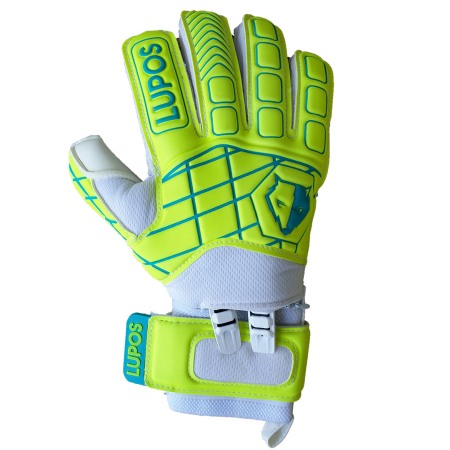
We'll cover what finger protection does mechanically, when it's genuinely useful, when it becomes a hindrance, and how the only LUPOS model with a removable fingersave — the LUPOS Lime — fits into this equation.
What is finger protection in goalkeeper gloves?
Finger protection, known in English as "fingersave" or "finger spines," is a system of rigid or semi-rigid rods integrated into the back of the glove, running along the length of each finger (usually the index, middle, ring finger, and sometimes the little finger).
These rods are made from semi-flexible material — a thermoformed polymer or laminated carbon fiber, depending on the manufacturer. They don't completely block finger movement, but they limit hyperextension: the sudden movement where the finger bends too far backward when the ball strikes the palm with force.
What finger protection actually does:
Picture a driven ball at 80 km/h hitting the tip of the middle finger. Without protection, the impact force is transmitted directly to the ligaments and interphalangeal joint — exactly what causes finger sprains and dislocations, among the most common injuries for goalkeepers.
With the spines in place, the rods absorb and distribute part of this force along the entire length of the finger, reducing the concentrated pressure on the joint.
What finger protection does NOT do:
- Prevent fractures caused by direct, perpendicular impacts to the bone
- Completely eliminate the risk of dislocation if the force is extreme
- Replace correct ball-catching technique
- Act as armor — it's a risk-reduction measure, not risk elimination
This distinction matters especially for parents. Finger protection reduces the likelihood of a sprain during normal play, but a child diving onto concrete with hands outstretched can still get injured even with the most expensive fingersave system.
When do you need gloves with finger protection?
The right answer depends on three factors: age, experience level, and injury history.
Goalkeepers under 12: possibly useful, but not essential
At this age, ligaments and tendons are still developing, and fine hand coordination isn't fully formed. A 9-year-old who catches a ball incorrectly is more likely to sprain a finger than a 16-year-old with years of training behind them.
That said, at mini-football and primary school level, shot power is low. Balls are lighter, distances shorter, and the actual impact on fingers rarely reaches the intensity that requires mechanical protection. Many goalkeeper coaches recommend that juniors learn correct catching technique WITHOUT fingersave, precisely because the protection masks technical errors rather than correcting them.
Recommendation: Useful after a real injury or if the child has a particular sensitivity. Not essential at this age.
Goalkeepers between 12 and 16: depends on context
At this stage, everything depends on how physical the playing style is and the individual's history. A 13-year-old playing at a high competitive level with daily training benefits from moving to gloves without protection — if their catching technique is solid — precisely to develop ball feel.
A goalkeeper of the same age playing recreationally once a week who has had previous sprains may benefit from temporary protection.
Key question for parents: Have they had finger injuries before? If so, protection is worth considering until the ligaments are fully consolidated.
Goalkeepers over 16 with experience: usually not needed
This is where the finger protection paradox emerges: the more experienced a goalkeeper is, the more the spines get in the way.
A senior goalkeeper who has built tactile sensitivity over years of training feels the rigid protection as a barrier between their hands and the ball. The ball "rebounds" differently, throws are less precise, catching feel decreases. Many professional goalkeepers refuse gloves with finger protection for exactly this reason.
The clear exception: recovery after injury. A 20-year-old goalkeeper who has dislocated a finger and is returning to matches can temporarily use protective gloves to protect the ligaments during rehabilitation.
Decision table: with protection vs. without
| Situation | With protection | Without protection |
|---|---|---|
| Child under 10, starting goalkeeping | Optional | Acceptable — shot power is low |
| Junior 10–14, regular training | Acceptable if they've had injuries | Recommended for technique development |
| Junior 14–16, high competitive level | Rarely needed | Recommended |
| Adult goalkeeper, 3+ years experience | Rarely needed | Recommended for optimal feel |
| Recovery after sprain/dislocation | Temporarily recommended | Not recommended at this stage |
| Training on synthetic turf (frequent falls) | Dorsal protection (foam) more useful | Depends on context |
| Official matches, high pressure | Optional | Preferred by experienced goalkeepers |
| Technical precision training (throws, distributions) | Not recommended — limits movement | Recommended |
The downsides of finger protection — what nobody tells you
Manufacturers selling gloves with fingersave have a commercial interest in presenting spines as a universal upgrade. The reality is more nuanced:
1. You lose ball feel The spines add a rigid layer between the fingers and the ball. At the catch, the ball "rebounds" slightly differently compared to a glove without protection. Many goalkeepers describe the sensation as a "wooden hand" — you don't feel the ball as directly, you can't control it as finely.
2. Distribution becomes less precise One-handed throws (throw-out, roll-out) require full finger mobility. Spines limit this mobility and reduce precision. In modern football where the goalkeeper distributes the ball as much as a centre-back, this limitation is not minor.
3. False dependency is created A junior goalkeeper who learns to catch with fingersave masks their technical errors. The fingers are positioned incorrectly, but the spines compensate. When they move to gloves without protection — inevitable at competitive level — the real technique surfaces, and injuries occur precisely because they never learned to catch correctly.
4. Added weight and bulk Spines add a few grams and extra volume to the back of the hand. During intensive training with hundreds of repetitions, this difference becomes noticeable and tiring.
What to do if you still want finger protection
If after reading this guide you decide you need fingersave — because there's an injury history or a doctor has explicitly recommended it — then look for gloves with removable spines, not fixed ones.
Removable systems allow you to take the rods out at training and put them back in for matches. This way you don't sacrifice technique development while keeping protection when it counts.
When evaluating gloves with fingersave, check the following:
- Are the spines removable or fixed? Fixed means zero flexibility.
- How many fingers are protected? Some models protect only 3 fingers (index, middle, ring), others all 5. More spines = more rigidity.
- What cut does the glove have? Fingersave on a Negative Cut makes the glove very rigid. On Roll Finger or Flat Palm, the effect is milder.
Conclusion: how to choose correctly
Choose gloves WITH finger protection if:
- There is a real history of finger injuries (sprain, dislocation)
- A doctor has explicitly recommended temporary protection
- The goalkeeper is returning after an injury and needs psychological reassurance
Choose gloves WITHOUT finger protection if:
- The goalkeeper is learning technique and you want to develop it correctly
- The priority is ball feel and distribution precision
- You want lighter, more flexible, and more comfortable gloves
- The goalkeeper is over 14 with solid technique
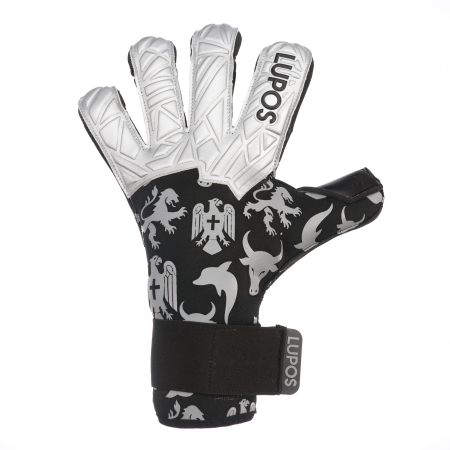
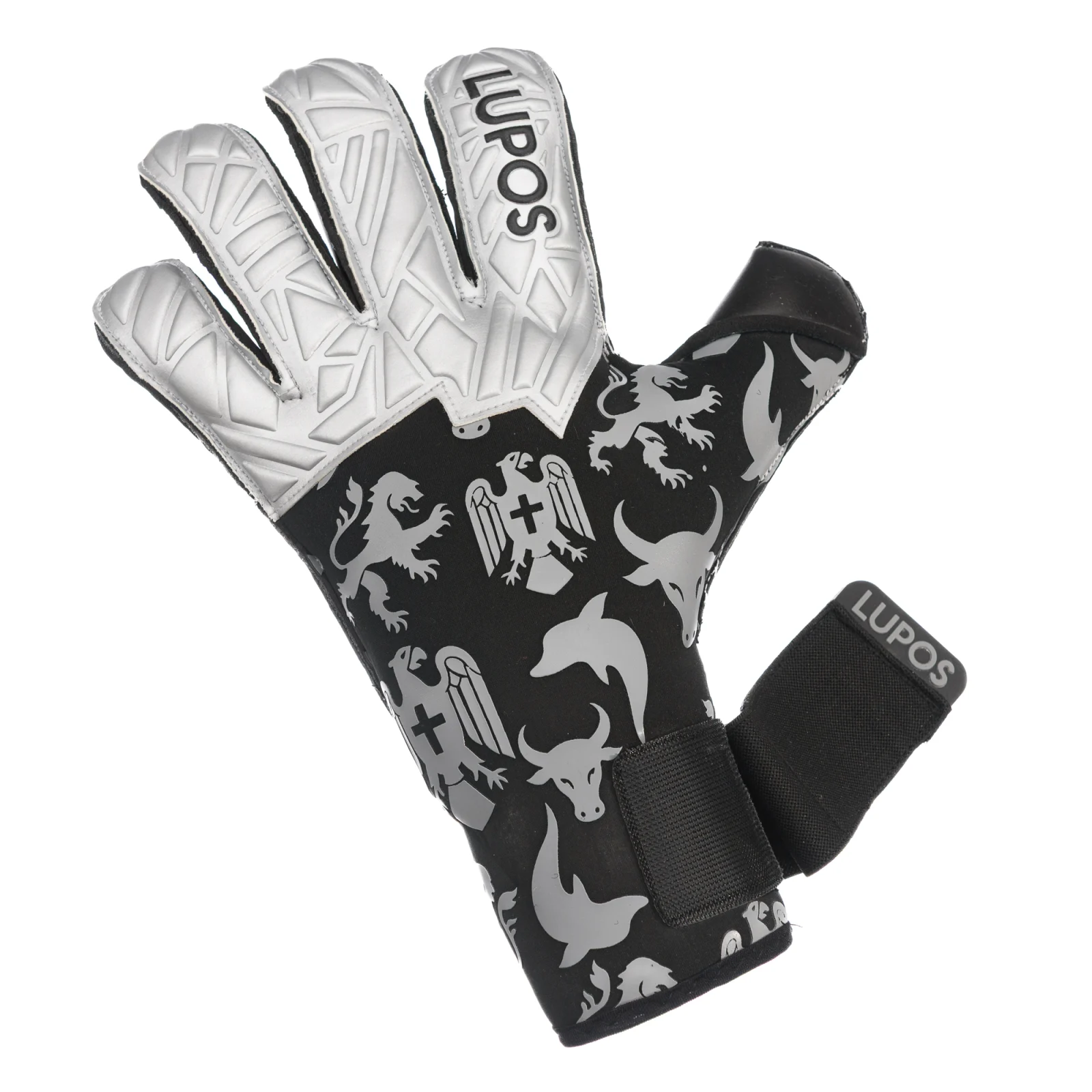
The LUPOS range offers both options: one model with a removable fingersave for those who need temporary protection, and the rest of the range built on the philosophy of quality latex + protective foam + optimised cut, without spines.
Recommended LUPOS models:
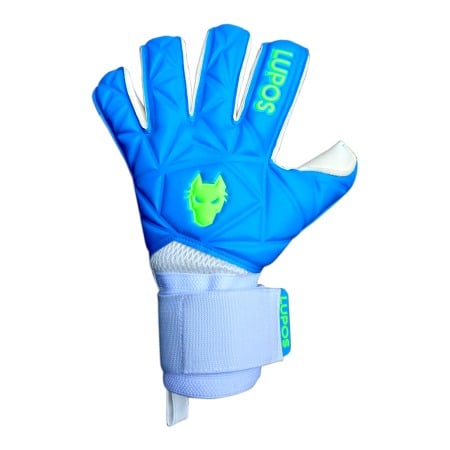
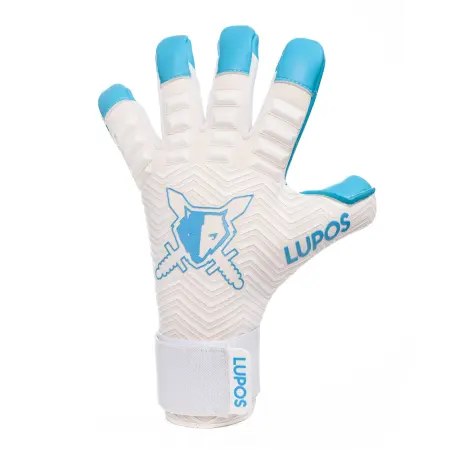
- LUPOS Lime — the only model with a removable fingersave, Super Soft 3mm latex, Flat Cut, 8mm dorsal foam, sizes 5–10 (€28.13). Ideal if you want temporary protection with the option to remove the spines when you no longer need them.
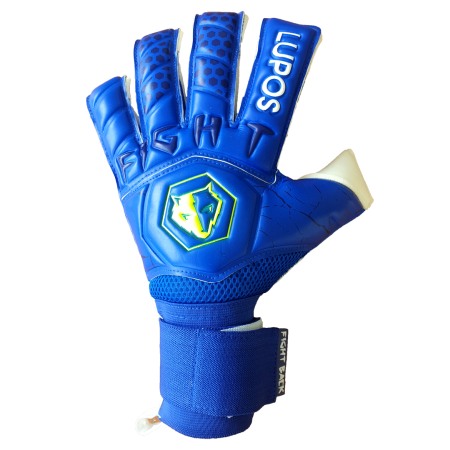
- LUPOS Azuro — Giga Grip 4mm latex, Roll Finger Cut, sizes 6–11, ideal for training and match.
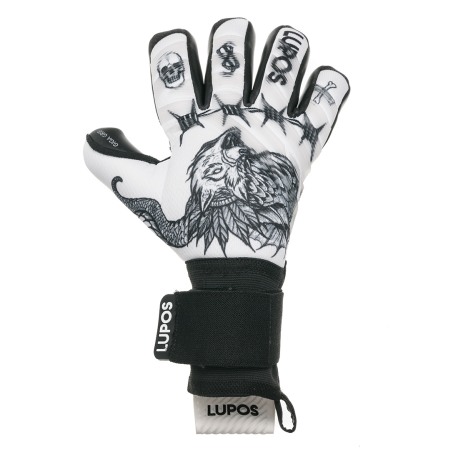
- LUPOS Hyper Black — Giga Grip 4mm (Elite) latex, Negative Cut, 4mm dorsal protection, double cuff, sizes 6–11.
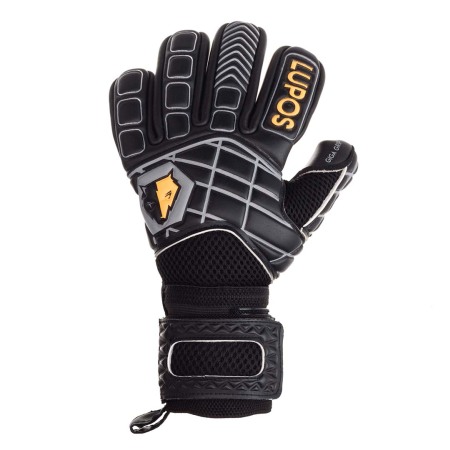
- LUPOS Helix One — Contact 4mm latex, Hybrid Cut, sizes 6–11.
All models come with a 14-day return policy and delivery anywhere in Romania and Europe.
To choose the correct size, consult our goalkeeper glove sizing guide.